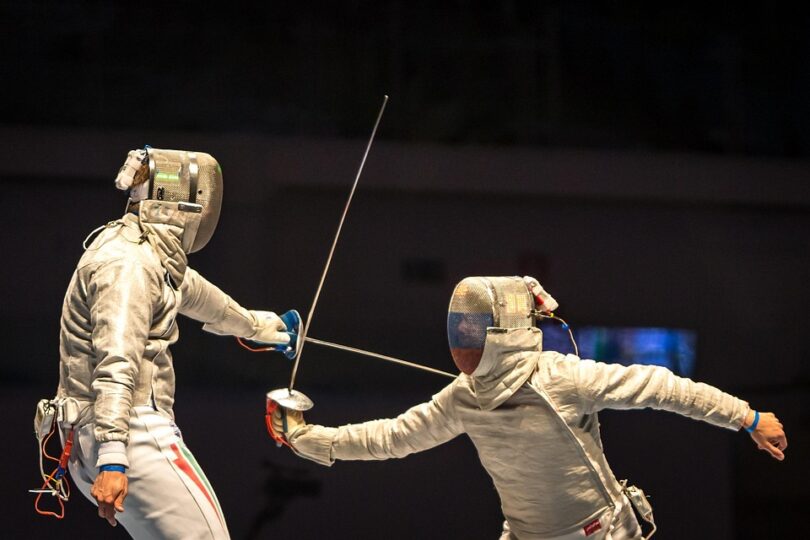


Fencing, often referred to as the sport of kings, has evolved into a refined form of martial art that combines speed, strategy, and elegance. Its roots trace back centuries, with a rich historical tapestry that showcases various cultural influences across the globe. This article explores the intriguing evolution of fencing from its ancient origins to its modern-day practice.
Ancient Origins
The history of fencing can be traced back to ancient civilizations, where sword fighting was more about survival than sport. In Egypt, tomb drawings from 1200 BC depict warriors engaging in combat using swords and shields. Similarly, in ancient Greece and Rome, martial arts were prevalent as part of military training, incorporating various techniques with different weapons.
The Greeks introduced the concept of a “pankration,” a no-holds-barred combat sport that combined both striking and grappling. Meanwhile, Romans developed the gladiatorial games, which included swordsmanship as a key element. The skills acquired in these brutal contests laid the groundwork for modern fencing techniques.
The Middle Ages: The Rise of Chivalry
During the medieval period, the art of fencing became intertwined with the concept of chivalry. Knights donned armor and trained rigorously in swordplay, focusing on a wide range of weapons including longswords, sabers, and more. The famous fencing manual authored by Johannes Liechtenauer, known as the “Zettel,” emerged in the 14th century and served as a fundamental guide for knightly combat.
Combat schools, or “fechtschulen,” proliferated across Europe, with masters teaching the art of defensive and offensive techniques. Manuals from this era emphasized the importance of footwork and distance, solidifying the principles that are still relevant in contemporary fencing.
The Renaissance: A Turning Point
The Renaissance was a transformative period for fencing, as it transitioned from martial practice to an elegant sport. The introduction of the rapier, a lighter, more maneuverable sword, allowed for a level of finesse and artistry not previously seen. Fencing became a favored pastime among the aristocracy, leading to the creation of formalized rules and etiquette.
Notable fencing masters emerged, such as the Italian maestro Achille Marozzo and the Spanish master Jerónimo Sánchez de Carranza. Their writings would influence generations of fencers and even contemporary martial arts. The focus on technique, speed, and agility began to shape a sport rather than mere combat.
The 18th and 19th Centuries: Codification and Competition
The 18th century witnessed the codification of fencing as a sport, with the establishment of rules and standardized equipment. In France, fencing schools flourished, and it became a key part of military training. The introduction of the foil, a lightweight training weapon, enabled fencers to focus on scoring points rather than merely attacking.
By the 19th century, fencing competitions emerged as a formalized sporting event. The first fencing competition was held at the 1896 Athens Olympics, making it one of the original Olympic sports. In this era, the principles of modern fencing continued to evolve, leading to the categorization of weapons into three main disciplines: foil, epee, and sabre.
Modern Fencing: A Sport for All
Today, fencing is an Olympic sport enjoyed by many around the world. The modern sport incorporates technology, including electronic scoring systems and specialized equipment designed to enhance safety and performance. The techniques have also seen advancements, with a focus on agility, reflexes, and mental strategy.
Global fencing federations have formed, standardizing rules and organizing competitions at various levels. Fencing is more than just a sport; it is a discipline that cultivates focus, confidence, and respect among its practitioners. Programs for youth and adults alike have made fencing accessible, fostering a community that honors its storied past while embracing its future.
Conclusion
The art of fencing represents a rich and varied history that spans continents and centuries. From its origins in ancient military practices to its current status as a respected competitive sport, fencing has continually evolved while retaining the core principles of skill, strategy, and honor. As we look to the future, the art of fencing promises to captivate new generations, ensuring that its legacy endures.
FAQs
1. What are the three types of fencing weapons used in modern competition?
The three types of fencing weapons are foil, epee, and sabre. Each has its own unique rules and scoring methods.
2. Is fencing a safe sport?
Yes, fencing is considered a safe sport due to the protective gear and equipment designed to minimize injury. Safety protocols are strictly enforced during practice and competition.
3. Can anyone learn fencing?
Absolutely! Fencing is open to individuals of all ages and skill levels, and many clubs offer programs for beginners.
4. How has technology influenced modern fencing?
Technology has influenced modern fencing through electronic scoring systems, improved protective gear, and enhanced training equipment, making the sport safer and more precise.
5. What is the importance of footwork in fencing?
Footwork is crucial in fencing as it allows fencers to position themselves effectively, maintain balance, and execute maneuvers quickly during a bout.