


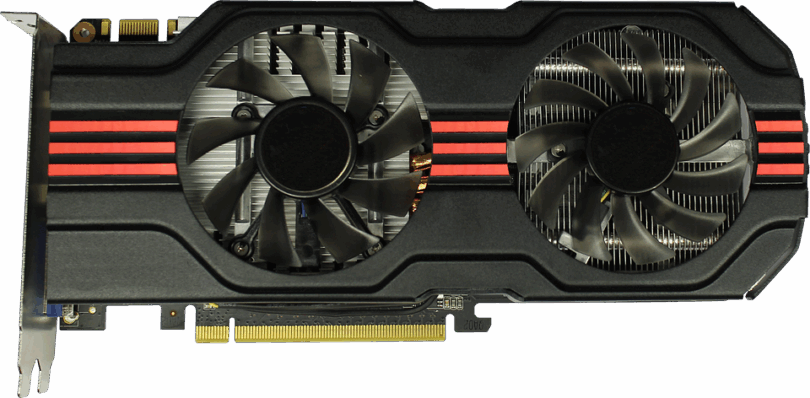


The Graphics Processing Unit (GPU) has come a long way since its inception in the late 20th century. Once relegated to rendering basic 2D graphics for video games, GPUs have evolved into powerful processors capable of handling complex computations, making them indispensable in various fields beyond gaming, including artificial intelligence, deep learning, scientific research, and more. This article explores the evolution of GPU technology and its impact on performance across different domains.
The Birth of the GPU
The journey of GPU technology began in the 1980s when companies like IBM and Intel introduced dedicated graphics chips. However, it was NVIDIA’s introduction of the RIVA series in the 1990s that marked the birth of the modern GPU. The RIVA 128, released in 1997, was one of the first GPUs to accelerate 3D graphics, offering developers the tools they needed to create more immersive environments in gaming. This innovation marked a significant departure from the traditional CPU-centric architecture.
From 2D to 3D: The Rise of 3D Graphics
The late 1990s saw a monumental shift with the introduction of 3D graphics. The release of the NVIDIA TNT in 1998 and the GeForce 256 in 1999, touted as the first “GPU” by NVIDIA, allowed for real-time 3D rendering. This innovation enabled developers to create visually stunning games, changing the landscape of interactive entertainment forever. The GeForce 256 also introduced hardware transformations and lighting, setting the stage for advanced rendering techniques.
The Shift to Parallel Processing
As gaming was becoming more demanding, the architecture of GPUs began to change. The introduction of programmable shaders in the early 2000s allowed developers to write custom code for rendering processes, leading to more detailed graphics and complex visual effects. GPUs transitioned from fixed-function pipelines to programmable pipelines, allowing for greater flexibility in how graphics are rendered.
CUDA and the Era of General-Purpose Computing
In 2006, NVIDIA launched the Compute Unified Device Architecture (CUDA), opening the door for general-purpose computing on GPUs (GPGPU). This was a game changer, allowing for non-graphical computations to be offloaded to the GPU. CUDA enabled developers to utilize the massive parallel processing capabilities of GPUs for tasks ranging from scientific simulations to financial modeling and data analysis. This marked a significant evolution in how computation was viewed, as GPUs began to rival CPUs in performance for certain applications.
The Deep Learning Revolution
The advent of deep learning in the 2010s represented another turning point for GPU technology. Researchers discovered that neural networks, particularly convolutional neural networks (CNNs), benefit from the parallel processing capabilities of GPUs, leading to dramatic advancements in machine learning. Companies like Google, Facebook, and others started leveraging GPUs to train complex models, resulting in breakthroughs in image recognition, natural language processing, and autonomous systems.
Modern Innovations and Future Prospects
Today, GPU technology continues to evolve with innovations like ray tracing, AI-enhanced graphics, and the rise of multi-GPU setups. NVIDIA’s RTX line, for instance, integrates real-time ray tracing capabilities, delivering incredible visual fidelity in gaming. AMD’s RDNA architecture focuses on power efficiency without compromising performance, which is crucial as gaming and computational demands continue to grow.
Furthermore, the introduction of specialized hardware such as Tensor Cores and dedicated AI processors indicates a significant shift towards integrating AI capabilities directly into GPU architecture. This trend illustrates the ongoing convergence of graphics and computation, paving the way for future innovations in fields like virtual reality, augmented reality, and beyond.
Conclusion
The evolution of GPU technology is a testament to human ingenuity and the relentless pursuit of performance. From its early days as a basic graphics chip to its current status as a powerhouse for parallel processing, GPUs have transformed industries and continue to shape the future of technology. As we look ahead, the potential for GPUs to drive advancements in artificial intelligence, machine learning, and immersive experiences remains vast. The journey is far from over, and the next chapter in GPU technology promises to be as exciting as its past.
FAQs
What is a GPU?
A Graphics Processing Unit (GPU) is a specialized processor designed to accelerate graphics rendering. It can also perform complex calculations in parallel, making it useful for non-graphics tasks like scientific computations and machine learning.
How do GPUs differ from CPUs?
While a Central Processing Unit (CPU) is optimized for single-threaded performance, handling a wide variety of tasks, a GPU is designed for parallel processing, making it more effective for tasks involving large datasets and computations that can be executed simultaneously.
How has GPU technology impacted gaming?
GPU technology has profoundly impacted gaming by enabling real-time 3D graphics, advanced rendering techniques, and immersive experiences. Modern GPUs provide the computational power necessary for lifelike graphics and complex game environments.
What are some uses of GPUs outside gaming?
Beyond gaming, GPUs are widely used in fields such as artificial intelligence, deep learning, scientific research, financial modeling, and data visualization, thanks to their ability to handle parallel processing efficiently.
What is CUDA?
CUDA (Compute Unified Device Architecture) is a parallel computing platform and application programming interface (API) model created by NVIDIA. It allows developers to utilize the power of NVIDIA GPUs for general-purpose computing tasks beyond graphics rendering.


