


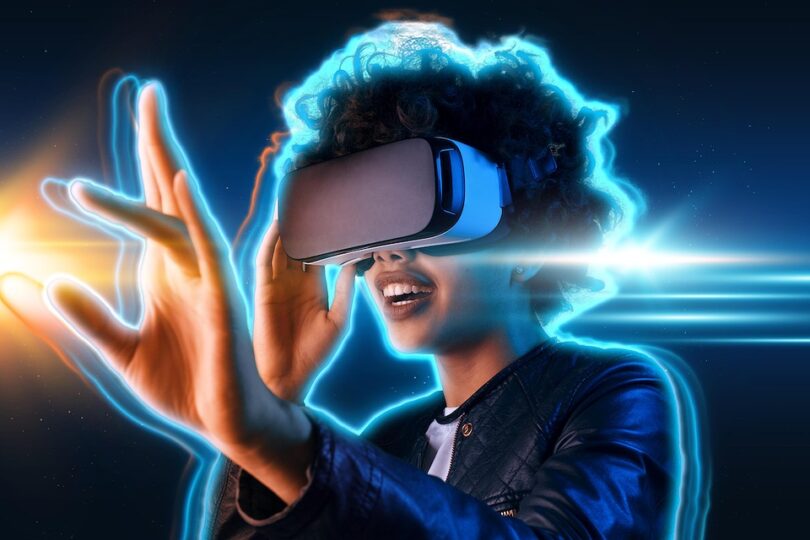


Virtual Reality (VR) has made significant strides since its inception, transforming from a concept in science fiction to a revolutionary technology transforming various sectors. In this article, we will trace the evolution of VR, exploring key milestones, advancements, and its current state in the tech landscape.
1. The Beginnings: Early Concepts and Theoretical Foundations
The idea of virtual reality can be traced back to the 1960s. The first significant work was done by Ivan Sutherland, who created the “Sword of Damocles” in 1968, a primitive heads-up display that offered a user a glimpse into a virtual world. Although this early system was cumbersome and heavy, it laid the groundwork for future developments.
2. The 1980s and 1990s: Growing Interest and Commercial Failures
In the 1980s, VR gained traction as various companies, such as VPL Research, began to develop VR hardware and software. Products like the DataGlove and EyePhone introduced interactivity into virtual environments. However, the technology was still in its infancy, and the costs were prohibitively high, leading to limited commercial success.
Notable Events in the 90s
- The release of Sega’s VR headset in 1991, which ultimately failed to take off.
- The launch of the Virtuality Group’s arcade systems, which offered multiplayer VR experiences but had limited appeal.
- President Bill Clinton’s declaration of 1993 as the year of “Virtual Reality.”
3. The 2000s: Technological Advances and Renewed Interest
The early 2000s saw an academic resurgence in VR research, with improved algorithms for graphics rendering and the development of more sophisticated VR hardware. While consumer-centric products remained scarce, the gaming industry began to explore VR possibilities, most notably with the introduction of VR simulations for flight training and military applications.
4. The Rise of Modern VR: The 2010s
The modern VR movement began in earnest in the early 2010s, driven by advancements in mobile technology and consumer electronics. The creation of the Oculus Rift, which launched on Kickstarter in 2012, marked a pivotal moment in bringing VR into the limelight. This initiative attracted funding and interest in the potential of VR for gaming and beyond.
Major Developments
- 2014: Oculus was acquired by Facebook, signaling a significant investment in the future of virtual experiences.
- 2016: Major VR headsets, including HTC Vive and PlayStation VR, were released, offering advanced tracking and more immersive experiences.
- Advancements in hardware: Improved graphics, motion tracking, and haptic feedback added to the realism of virtual environments.
5. Current State and Future Directions
Today, VR has evolved into a versatile tool used in various fields beyond gaming, such as healthcare, education, architecture, and training simulations. The integration of artificial intelligence (AI) and machine learning into VR experiences further enhances interactivity and personalization.
Future Trends
- Wireless Technology: As VR becomes more mainstream, the demand for wireless solutions will grow, improving user mobility.
- Social VR Platforms: Increasing interest in shared virtual experiences, especially for social interaction and events.
- Augmented and Mixed Reality: Blending VR with augmented reality (AR) for more dynamic and interactive environments.
Conclusion
The evolution of virtual reality is a testament to human innovation and creativity. From its rudimentary beginnings to its current status as a transformative technology, VR has the potential to reshape how we interact with digital content. As developments continue, the future of VR appears promising, with numerous applications yet to be explored. The journey from concept to cutting-edge technology is ongoing, and its impact on various industries will only expand as the technology advances.
FAQs
What is virtual reality?
Virtual reality is a simulated experience that can resemble or differ from the real world. It immerses users in a computer-generated environment that they can interact with using specialized equipment like VR headsets and controllers.
How does VR technology work?
VR technology works by creating a three-dimensional environment that users can explore. VR headsets display images from different angles to each eye, providing a sense of depth and immersion. Sensors track user movements, allowing interactions with the virtual environment.
What are the main applications of VR?
VR is widely used in gaming, education, training simulations, architecture, healthcare, and even therapy. Its immersive nature allows for unique learning and engagement opportunities across various fields.
What is the future of VR technology?
The future of VR technology includes advancements in hardware and software, increased accessibility, enhanced social platforms, and integration with other technologies like AI and AR. As innovation continues, VR will likely foster new forms of interaction and application.


