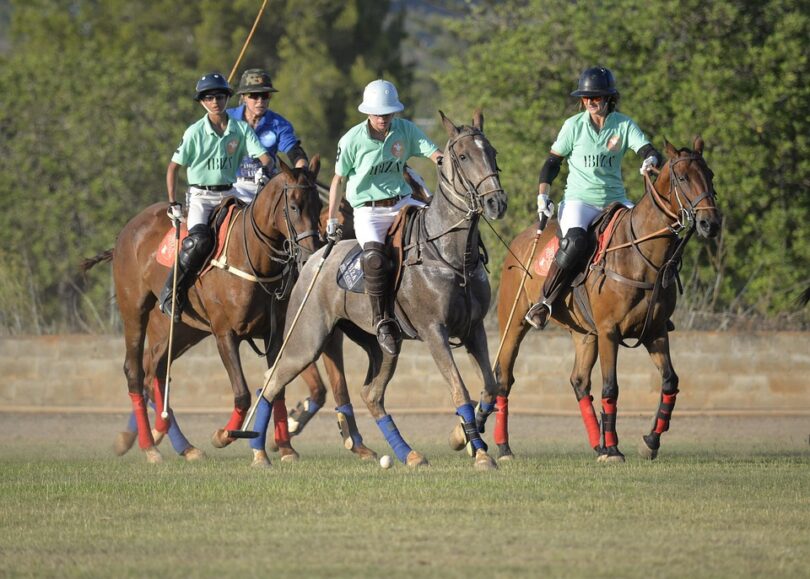


Polo, often dubbed as the “sport of kings,” has a rich history that spans over two millennia. Its origins can be traced back to ancient Persia, where it was played as a training exercise for cavalry units. As centuries passed, the sport evolved, spreading across continents and different cultures, highlighting not only athletic skill but also the prestige associated with the game.
Origins of Polo
The earliest recorded instances of polo date back to the 6th century B.C. in Persia (modern-day Iran). Initially, the game served a dual purpose: as both a sport and a means of training for soldiers. The game involved horse-mounted players using mallets to hit a ball, similar to how it is played today. Persian nobility quickly adopted the sport, and it became a symbol of status and power.
By the 10th century, the game had gained significant popularity in the Persian Empire, often played in large gatherings with spectators. The influence of Polo began to extend to other parts of Asia, notably to India and China, where adaptations of the game emerged.
Polo in India and Beyond
In the 13th century, polo made its way into India through the Mughal Empire. The maharajas embraced the sport, elevating it to new heights of popularity. The rules were modified, and various regional styles emerged, each adding to the game’s rich tapestry. The Indian variant of polo became known as “pulu,” and it was played not only by royalty but also among commoners, popularizing the sport across social classes.
By the 19th century, British colonizers took notice of the game during their time in India and adapted it according to their tastes. Major General Freddie Brooke is credited with establishing modern polo rules after founding the first polo club in England in 1869, which allowed the sport to flourish in the West.
The Evolution in the Modern Era
The 20th century saw polo become increasingly popular in the United States, especially in areas like New York and California. The establishment of clubs and tournaments played a pivotal role in elevating the sport’s profile, making it accessible to a broader audience. The first U.S. National Polo Championship was held in 1904, marking a significant step forward for the sport in America.
Internationally, the Fédération Internationale de Polo (FIP) was formed in 1982 to govern the sport, standardizing rules and promoting international competitions. The World Polo Championship, first held in Argentina in 1987, allowed countries to showcase their best players on a global platform, further elevating the sport’s status.
Polo Today
Today, polo is played in over 80 countries worldwide, with Argentina, England, Spain, and the United States being dominant forces. The sport has diversified into several forms, including arena polo and beach polo, attracting new audiences and players. Various international tournaments, such as the prestigious Argentine Open and the Cartier Queen’s Cup in England, draw huge crowds and significant media attention.
The Impact of Technology
The advent of technology has also revolutionized the sport. Modern equipment, including lightweight mallets and high-performance saddles, has improved gameplay and player safety. Furthermore, innovations in training methods, analytics, and even biofeedback tools have enhanced player performance and the overall spectator experience.
Conclusion
Polo has come a long way since its humble beginnings in ancient Persia. What started as a cavalry training exercise has evolved into a sophisticated team sport, capturing the hearts of millions globally. The exclusivity and prestige associated with polo continue to attract elite players and enthusiasts, ensuring its status as a royal sport. As it continues to evolve with technological advancements and cultural exchanges, polo remains a timeless testament to athletic spirit and camaraderie.
FAQs
1. What equipment is needed to play polo?
Players typically need a horse, a mallet, a helmet, knee guards, and appropriate clothing. Polo saddles and bridles are specially designed for the sport to enhance performance and safety.
2. How many players are on a polo team?
Each polo team consists of four players. However, variations exist, such as with indoor and beach polo formats.
3. Is polo an expensive sport to play?
Yes, polo can be quite expensive due to the costs associated with obtaining and maintaining horses, as well as club memberships and equipment.
4. Where can I watch professional polo matches?
Professional polo matches are held internationally, with major tournaments taking place in countries such as Argentina, England, and the U.S. Many clubs also host matches that are open to the public.
5. Can anyone learn to play polo?
Yes, many polo clubs offer lessons for beginners. While it requires a certain level of equestrian skill, anyone with an interest in learning can take lessons and start playing.